Architect, Consultant
Rebuilding Incent from a Legacy Time Bomb into a Scalable Revenue Platform
This was not a patch job. It was a full strategic reconstruction of a platform under technology, performance, and cost pressure, executed without interrupting business continuity.
Projects>Incent GmbH
Incent GmbH
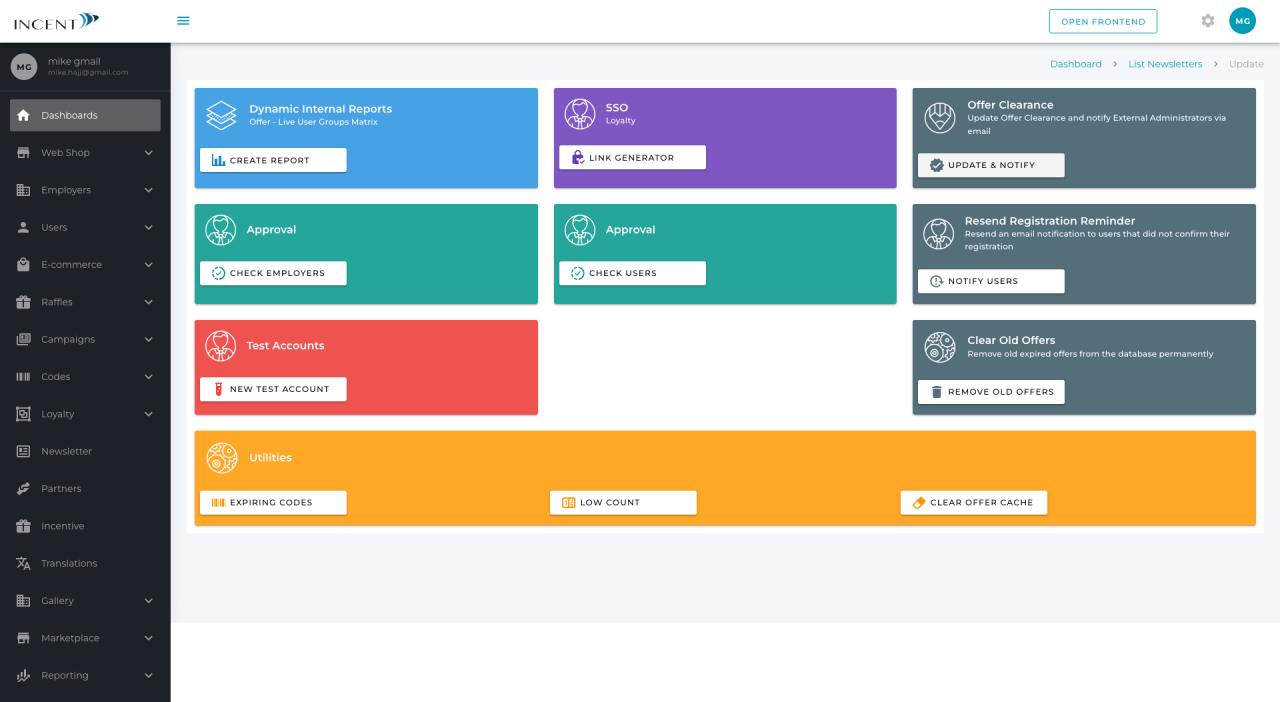
A full-stack reconstruction of a legacy employee-benefits platform into a scalable, modern architecture built for growth.
Incent had reached a dangerous inflection point: obsolete technology, unstable runtime behavior during peak operations, and an infrastructure bill inflated by misaligned optimization attempts.
I led a staged modernization over two years, rebuilding core interfaces and backend capabilities, then introducing microservices and gateway-driven controls for scalable operations.
The transformation delivered hard business outcomes: stronger performance, higher concurrency capacity, lower hosting cost, and new product revenue opportunities through the shop platform.
Challenge Landscape
- Critical legacy stack components reached end-of-life (PHP5.6, Symfony2, Debian5), creating severe operational risk.
- TLS upgrade constraints on old infrastructure caused HTTPS failures and reliability issues.
- Monolithic architecture mixed frontend, back office, and backend concerns, making scaling expensive and fragile.
- Codebase quality and maintainability suffered from years of inconsistent standards and missing documentation.
- Previous optimization attempts added costly services without solving core architectural inefficiencies.
Core Platform Components
Reconstruction Strategy and Legacy Separation
Separated legacy concerns into staged deliverables so business operations could continue during transformation.
Rebuilt back office and websites on VueJS while porting critical legacy behaviors into modern API services.
Removed obsolete code paths progressively instead of carrying technical debt into the new system.
Performance, Cost, and Runtime Stabilization
Shifted from expensive fragmented service sprawl to Kubernetes-centered operational topology.
Replaced prior load-balancing approach with Nginx + HAProxy strategy and optimized data indexing footprints.
Migrated Redis and Memcached into the cluster and aligned runtime resources to actual workload needs.
Shop Expansion and New Revenue Layer
Built shop microservices with NodeJs/Fastify and integrated MongoDB + Elasticsearch for flexible catalog/search behavior.
Integrated payment gateways, providers, and external sales/reporting tools with modular service boundaries.
Delivered both standalone web app and syndicated widget-ready interface model for client-side distribution.
Strategic Response
- Executed a staged two-year reconstruction plan instead of high-risk big-bang replacement.
- Rebuilt admin back office and frontend in VueJS while recreating legacy operations as modern APIs.
- Migrated backend capabilities to modern services, then decomposed into microservices behind an API Gateway.
- Replaced costly infrastructure patterns with Kubernetes-native deployment and optimized data/index strategies.
- Built a new shop backbone and interface with NodeJs/Fastify + MongoDB + Elasticsearch and integrated payments, providers, and reporting tools.
Platform Evolution Timeline
Stage 1 (6 months) - Admin + Backend Reconstruction
Rebuilt admin back office in VueJS, created PHP8/Symfony6 backend APIs, removed obsolete legacy admin operations, and deployed components on Kubernetes.
Stage 2 (3 months) - Frontend Website Reconstruction
Rebuilt public-facing frontend with VueJS, recreated old backend operations as new APIs, and replaced legacy frontend deployment.
Stage 3 (3 months) - Microservices + Gateway
Decomposed backend into microservices and introduced API Gateway for centralized access control, traffic management, and cloud-aware routing.
Stage 4 (9 months) - Shop Platform Expansion
Built new shop services with NodeJs/Fastify, integrated MongoDB + Elasticsearch, connected payment/sales/marketing providers, and deployed as Kubernetes-native services.
Key Architectural Decisions
- Rebuilt core systems on modern stack patterns: PHP8/Symfony6 APIs, VueJS channels, and service-oriented runtime boundaries.
- Introduced API Gateway-driven microservice architecture for centralized authentication, authorization, access control, and traffic management.
- Deployed platform components on Kubernetes with Nginx + HAProxy traffic strategy and in-cluster Redis/Memcached services.
- Added shop microservices on NodeJs/Fastify with MongoDB + Elasticsearch for high-flexibility commerce operations.
Measured Impact
- Increased concurrent-user capacity from around 200 to around 800.
- Reduced page load time from around 4.5 seconds to under 2 seconds.
- Reduced hosting cost by about 50 percent through architecture and infrastructure redesign.
- Enabled new shop-driven revenue streams and syndicated plugin distribution model for clients.
When your platform is constrained by legacy technology, runaway cost, and performance risk, I lead the reconstruction strategy that restores stability and unlocks scalable growth.